The captain differential playbook
When to back the low-ownership pick. Three match conditions that justify differential captaincy, and recent case studies from the 2025 season.
Read →A dated look back at Cricket Winner's pre-match fantasy read for the TATA IPL 2026 curtain-raiser between Royal Challengers Bengaluru and Sunrisers Hyderabad at M. Chinnaswamy Stadium - role lists, captain pairs, a suggested XI, and transfer lines left deliberately open until after the toss.
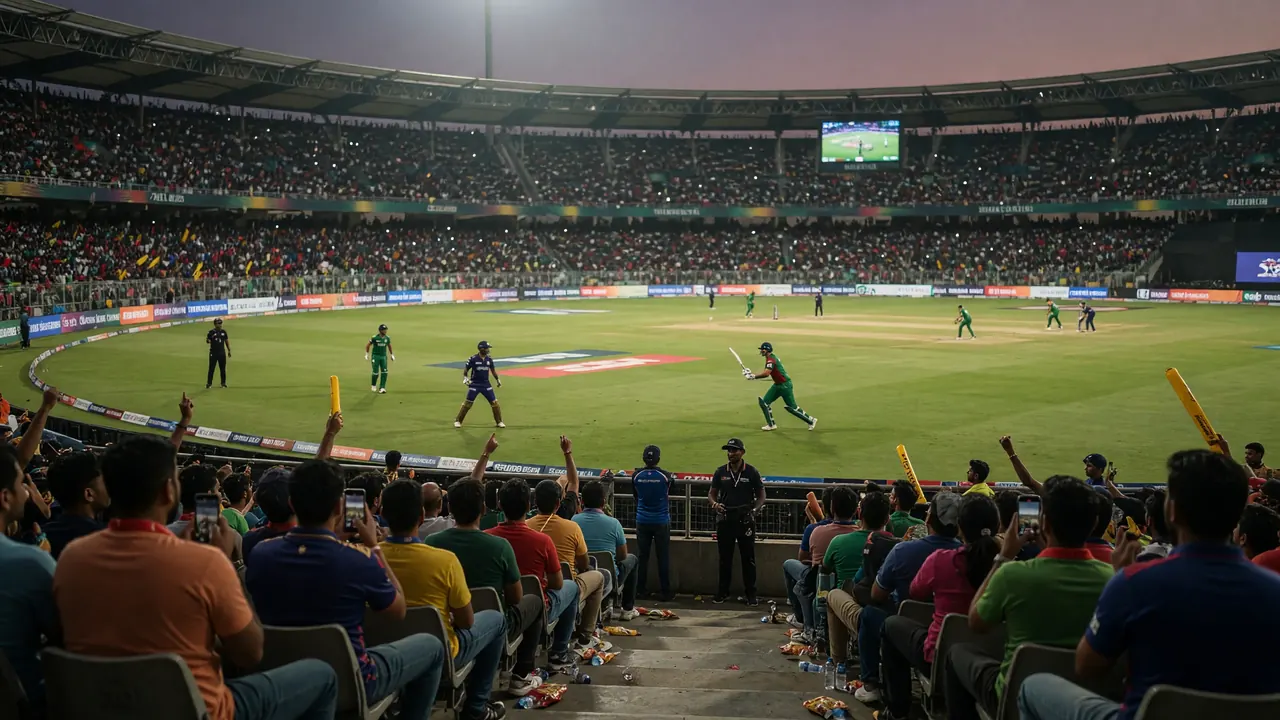
On the morning of 28 March 2026, Cricket Winner published a short fantasy preview built around the first match of TATA IPL 2026. The fixture was RCB against SRH at M. Chinnaswamy Stadium in Bangalore. The piece did not pretend to be a full match brief. It was a compact card: who to lock at the gloves, who to stack in the batting group, which all-rounders carried dual value, which bowlers belonged on the shortlist, how to split captaincy between a safe pair and a risk pair, and what a finished XI might look like before the toss forced the last edits.
Reading that card again now is useful for a different reason than it was useful on the day. Openers force fantasy managers into a thin evidence base. There is no league form to lean on yet, only recent international windows, franchise memory from the previous season, and the structural habits of a ground that tends to reward batters who clear the rope and bowlers who can still take a new-ball wicket. The 28 March card is a clean sample of how one desk handled that thin evidence without inventing certainty it did not have.
The basics were stated without decoration. First match of the season. Royal Challengers Bengaluru against Sunrisers Hyderabad. M. Chinnaswamy Stadium, Bangalore. RCB arrived as winners of the previous edition. SRH arrived after finishing sixth on the points table. Both sides, the preview noted, would be trying to open the account with a win rather than ease into the campaign.
One leadership note sat above the role lists. Ishan Kishan was named to lead SRH in the absence of Pat Cummins. That single line mattered for fantasy construction because it locked a high-usage wicketkeeper-batter into a captaincy role on the field and, for many managers, into the gloves slot on the fantasy sheet. When a keeper also leads the side, the probability that he bats through a long enough stretch of the innings rises, and the keep-plus-runs package becomes harder to leave out of the first shortlist.
The preview organised names by role rather than by franchise XI. That is a practical structure for fantasy readers, because salary-cap contests force managers to fill slots, not reproduce official line-ups. The lists were short and the labels were blunt, which is how a usable pre-toss card should read.
Two keepers were named. Ishan Kishan carried the primary recommendation, with the supporting note that he had been among the highest run scorers at the T20 World Cup 2026. Tim Seifert sat beside him as the attacking alternative: high risk, high reward, useful when a manager wanted upside at the gloves rather than the safer floor of the SRH captain.
That split is familiar to anyone who has built opener XIs. One pick is the expected minutes and the expected top-order exposure. The other is a punt on an aggressive innings that may or may not arrive. The card did not pretend Seifert was the consensus lock. It simply kept him on the board for managers chasing a different shape.
Four batters filled the middle of the card. Virat Kohli was listed as the consistent performer. Prithvi Shaw was tagged as a powerplay specialist. Rajat Patidar was the differential name. Tristan Stubbs closed the group as a solid middle-order option. None of those labels needed embroidery. Kohli's floor, Shaw's early-overs ceiling, Patidar's lower ownership path, and Stubbs's finishing or middle-overs role gave managers four different ways to spend batting credits without stacking four identical profiles.
In an opener, those profile labels matter more than week-to-week form bars, because there are no week-to-week form bars yet. The card's value was in separating the roles cleanly enough that a manager could build either a high-floor top order or a more lopsided powerplay-plus-middle construction without guessing what each name was meant to do.
Will Jacks and Hardik Pandya were the two all-rounders. Jacks was framed around spin plus batting. Pandya was framed around finishing plus wickets. That is a classic dual-value pair: one offers overs and middle-order runs, the other offers death hitting and a seam burst. On a Chinnaswamy night, both profiles can clear the points threshold without needing a once-in-a-season outlier.
The bowling shortlist was three names deep. Prasidh Krishna arrived with the note that he had held the Purple Cap in the 2025 edition. Mohammad Shami was listed as a powerplay wicket-taker. Ravi Bishnoi covered the spin option. The structure is simple and still sound: one proven season-long wicket-taker, one new-ball specialist, one wrist-spin counter for middle overs. A manager who wanted more bowling depth would have had to leave the card and invent names the source never offered. This retrospective stays inside that ceiling.
Captaincy is where most opener cards either help or collapse. The 28 March piece split the decision into two clean pairs rather than dumping six names into one undifferentiated list. The safe pair was Virat Kohli as captain and Ishan Kishan as vice-captain. The risky differential pair was Hardik Pandya as captain and Will Jacks as vice-captain.
That is a usable hierarchy. Kohli-plus-Kishan is the floor-first construction: a high-usage batter with a long history of batting through middle overs, backed by a keeper-batter who was also leading SRH on the night. Pandya-plus-Jacks is the dual-role construction: both names can score with bat and ball, so the multiplier can catch points from either phase of the match. Managers who needed rank leverage in larger fields had an explicit alternative. Managers who needed not to miss the board in a small league had an explicit default.
What the card did not do is also worth recording. It did not invent ownership percentages. It did not claim a venue average that was not on the page. It did not force a winner call. The captain section stayed inside role logic and risk appetite, which is why it still reads cleanly months later.
Safe, in this context, does not mean boring. It means the two names most likely to stay involved for long enough that the multiplier has something to multiply. Kohli's consistency label and Kishan's dual role as SRH leader and primary keeper pick made them the natural anchor pair. A small-league manager could set that combination before the toss and spend the remaining credits on the role lists without reopening the captaincy question every five minutes.
Pandya and Jacks only make sense as a pair if the manager accepts variance. Either can blank with the bat and still salvage the card with overs, or blank with the ball and still salvage it with a finishing burst. That is attractive in grand-league fields where unique successful combinations move rank. It is less attractive in head-to-heads, where the safer floor usually beats the clever construction. The original card left that choice visible rather than pretending one pair fitted every contest type.
The card closed with a concrete eleven rather than another cloud of alternatives. Wicketkeeper: Ishan Kishan. Batters: Virat Kohli, Prithvi Shaw, Rajat Patidar, Tristan Stubbs. All-rounders: Will Jacks, Hardik Pandya. Bowlers: Prasidh Krishna, Mohammad Shami, Ravi Bishnoi.
Count the structure. One keeper. Four pure batters. Two all-rounders. Three bowlers. That is a batting-heavy opener template built for a ground where the innings often moves quickly and dual-role names can still cover the overs deficit. It is not a bowling-stack sheet. It is not a five-bowler grind sheet. It is a Chinnaswamy-first construction that assumes runs will be available and that the bowling points will come from a short, high-quality trio rather than from depth alone.
There is an obvious concentration risk inside that eleven. Several of the highest-usage names sit on the RCB side of the fixture, while the gloves and the SRH leadership sit with Kishan. That is not a flaw in the card so much as a statement of preference: lock the names with the clearest roles, then accept that the sheet will lean toward the side or the players expected to own the middle of the night. A manager who disliked that lean would have used the role lists to rebalance, not the finished XI as an unchangeable script.
Three assumptions sit under the finished sheet. First, that Kishan would keep and bat high enough to justify the gloves slot. Second, that Kohli and at least one of Shaw or Patidar would deliver a usable top-order return. Third, that Jacks and Pandya together would cover enough overs that three specialist bowlers would be enough. None of those assumptions is exotic. All of them are the kind of working bets an opener card has to make when confirmed line-ups are still hours away.
The transfer block was the most honest part of the original card. Both the IN and OUT lines were marked as updated after the toss rather than filled with fixed pre-match names. That is not a missing section. It is a methodological choice. On opener night, the late information - who actually walks out, who is held back, which overseas combination is preferred - is often more valuable than any pre-written swap list published at breakfast.
Fantasy platforms usually freeze teams at the toss window, not at 8:35 in the morning. A card that pretends to know the final transfers before the official sheets are out is performing confidence it has not earned. The 28 March piece avoided that performance. It told readers where the role locks were, then left the last one or two moves for the only moment when those moves can be made with real information.
For managers building habits rather than chasing one lucky rank, that is still the right sequence. Set the skeleton early. Keep one or two flexible credits. Spend the final minutes on confirmed inclusions and confirmed omissions, not on rewriting the whole sheet because a morning article tried to guess the toss. Broader captain logic and contest-selection habits that sit behind that sequence are covered in our ongoing fantasy cricket tips desk notes.
Below the XI, the original card listed four process notes rather than four more player names. Select the captain from consistent performers. Track recent form ahead of reputation alone. Avoid loading too many players from one team. Prefer death-over bowlers when chasing wicket points. Those lines are generic on the surface and still practical in use, especially on night one of a league when reputation is loud and evidence is thin.
The consistency note explains the safe captain pair. The form-over-reputation note explains why Seifert and Patidar were allowed onto the board at all. The anti-stacking note is the quiet counterweight to the finished XI's natural lean. The death-bowling note explains why a three-man bowling group can still work if the names selected are the ones most likely to bowl when wickets are expensive in fantasy terms.
None of those notes required a score prediction. None of them required a winner call. They were guardrails for managers who would otherwise overfit the previous season's narrative - defending champions here, sixth-place side there - into a sheet that forgot how points are actually scored on the night.
There was no invented pitch number. There was no fabricated injury bulletin. There was no claim that any single name was undroppable across every contest size. The disclaimer on the original piece said the analysis rested on team form, pitch conditions and available data, and that it did not guarantee a result. That remains the correct ceiling for a breakfast-time opener card. A retrospective that pretends the piece knew more than it published would be rewriting history rather than reading it.
Retrospectives are easy to waste on scoreboard gloating. That is not the point of returning to a 28 March fantasy sheet. The useful question is whether the card gave a manager a defensible process before the first ball of the season. On that test, the piece holds up. It named the fixture and the ground. It recorded the previous-edition context for both sides. It flagged Kishan's leadership of SRH without Cummins. It separated keepers, batters, all-rounders and bowlers into shortlists a salary cap can actually use. It offered one safe captain pair and one differential pair. It published a finished XI. It left transfers open until the toss.
That is a complete pre-match skeleton. A manager could disagree with Patidar as the differential, or prefer Seifert over Kishan in a grand-league punt, or want a fourth bowler instead of a fourth batter. Disagreement is fine. The structure still told the reader where the disagreements lived. Months later, with the season long since moved on from night one in Bangalore, the durable lesson is the structure rather than any single name on the sheet.
Openers will keep arriving every March or late March for as long as the league calendar looks like this. The managers who handle them cleanly are usually the ones who lock roles early, split captaincy by contest type, and refuse to fake transfer certainty before the toss. The 28 March 2026 RCB vs SRH card is one worked example of that discipline, preserved here as a dated record rather than as a claim about what later nights proved or disproved.
A short list of related pieces for readers who want to move from this opener retrospective into broader captain and venue context.
When to back the low-ownership pick. Three match conditions that justify differential captaincy, and recent case studies from the 2025 season.
Read →Six seasons of Chinnaswamy data. Why the chase rate has flipped three times in four years - and what that means for captain picks.
Read →Wankhede evening fixture. Captain pick: Suryakumar Yadav. Differential: Ravindra Jadeja. Avoid: Trent Boult.
Read →