Revisiting the 28 March 2026 fantasy card for the RCB vs SRH IPL opener.
Role picks, safe and differential captain pairs, the suggested XI, and transfers left open until after the toss from the original Cricket Winner opener card.
Read →Practical guides on the parts of IPL fantasy cricket that move the leaderboard - captaincy, points-system reasoning, contest selection, and the trade-offs between risk and rank.
Practical guides on the parts of IPL fantasy cricket that move the leaderboard - captaincy, points-system reasoning, contest selection, and the trade-offs between risk and rank.
Recent editorial pieces that sit alongside the captain, points and contest guidance below.
Role picks, safe and differential captain pairs, the suggested XI, and transfers left open until after the toss from the original Cricket Winner opener card.
Read →When to back the low-ownership pick, and the match conditions that justify moving off the consensus captain.
Read →Where batting, bowling and fielding points actually come from, and how the captaincy multiplier moves rank.
Read →The captain gets 2x and the vice-captain gets 1.5x. That asymmetric weighting is the single biggest decision you make before the toss. Here's how we approach it.
Venue scoring averages for evening matches are the starting point. Higher average = more ceiling for top-order captain picks.
Promoted batters have higher ceiling. Players moved down the order have lower floor.
Captain picks that face the opponent's weakest bowling phase are the highest-ceiling option.
Captain picks under 35% ownership are differential enough to matter in larger contests. Picks over 60% are essentially consensus captain choices.
The vice-captain's 1.5x is a meaningful swing. Don't waste it on a player you don't strongly believe in.
A run is worth 1 point. A boundary is worth 4. A six is worth 6. A half-century adds 8. A century adds 16. Strike-rate bonuses are applied as follows:
| SR > 170 (min 10 balls) | +6 |
| SR 150-170 | +4 |
| SR 130-150 | +2 |
| SR 50-70 (min 10 balls) | -2 |
| SR < 50 | -4 |
A wicket is worth 25. LBW or bowled adds 8. A maiden over adds 4. Wicket-haul milestones are layered on top. Economy bonuses work like this:
| Econ < 5 (min 2 overs) | +6 |
| Econ 5-6 | +4 |
| Econ 6-7 | +2 |
| Econ 10-11 | -2 |
| Econ > 11 | -4 |
A catch is worth 8. A stumping is worth 12. A direct-hit run-out is worth 12. Three catches in a match adds another 4. Fielding points are the quietest points on the leaderboard but they compound.
| Catch | +8 |
| 3-catch bonus | +4 |
| Stumping | +12 |
| Run out - direct hit | +12 |
| Run out - assist (each) | +6 |
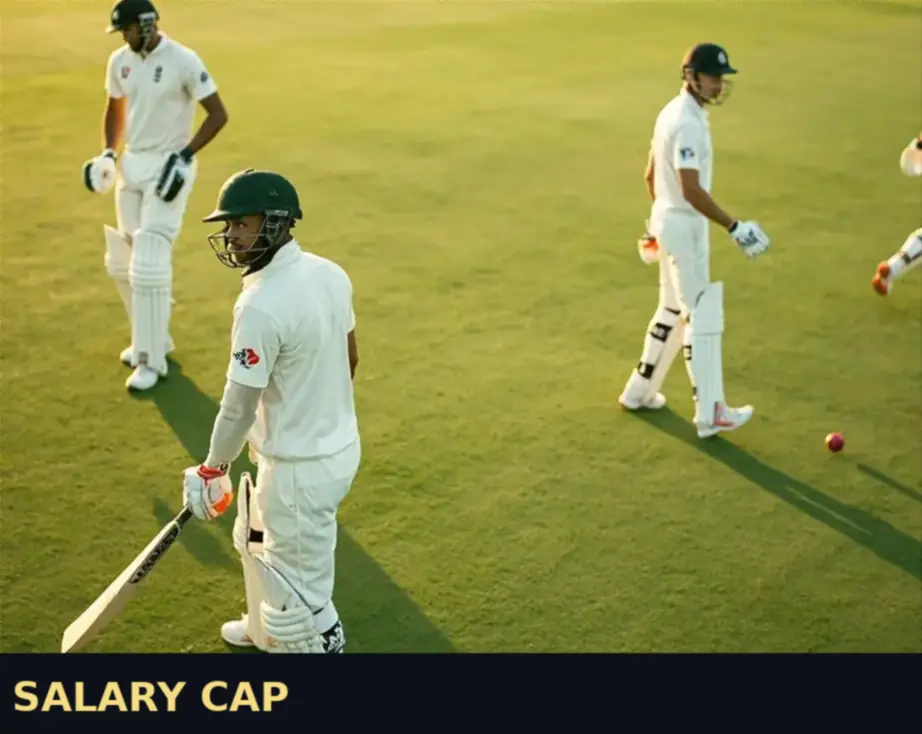
You have 100 credits to spend across 11 players. Top-order batters cost more. Wicketkeeper-batters who bat in the top six cost more than specialist wicketkeepers. Allrounders cost the most because they accumulate points in two roles.
Allocate roughly 45-55% of the budget to your top three picks (the players you would captain). Allocate 30-35% to the next four picks (the second tier). Allocate the remaining 15-20% to the bottom four picks (bench-quality and differential players).
Spending too much on a single star player leaves the rest of the team too thin. Spreading too evenly leaves no ceiling for captain picks. The optimal strategy depends on the contest size - grand-prize contests reward ceiling, head-to-head contests reward floor.
Once you have the basics down, three advanced strategies can push your rank-points higher.
When two players from the same team have a strong correlation - a top-order batter and a death-overs bowler, for example - picking both in your XI gives you more exposure to that team's success than picking two unrelated players.
Multi-entry contests let you submit multiple teams. The optimal strategy is to diversify across 2-3 captaincy options rather than submit identical lineups with minor tweaks.
Most apps allow player swaps up to the toss. The optimal strategy is to delay your swap decisions as long as possible, so you have the latest likely-XI information.
The desk writes a captain pick, a differential captain, a bowler to watch, and an avoid pick for every match. Here is how to combine them with your own reading.
The captain pick is the most reliable place to start. If you agree with the desk's reasoning, use the captain pick as your captain.
If you are entering a large contest and want more variance, swap the captain pick for the differential captain. The differential captain has higher ceiling and higher floor of variance.
The bowler to watch is a strong vice-captain option if you do not want to use an allrounder. Death-overs bowlers are the highest-leverage vice-captaincy options.
The avoid pick is a player the desk thinks is overrated for this specific match. If your XI includes the avoid pick, consider swapping them out.
The desk's previews are a starting framework, not a final answer. Late team-news, unexpected pitch behaviour, and your own read of the match all matter.
Once you have the basics down, three advanced strategies can push your rank-points higher.
When two players from the same team have a strong correlation - a top-order batter and a death-overs bowler, for example - picking both in your XI gives you more exposure to that team's success.
Multi-entry contests let you submit multiple teams. The optimal strategy is to diversify across 2-3 captaincy options rather than submit identical lineups with minor tweaks.
Most apps allow player swaps up to the toss. The optimal strategy is to delay your swap decisions as long as possible, so you have the latest likely-XI information.
The desk writes a captain pick, a differential captain, a bowler to watch, and an avoid pick for every match. Here is how to combine them with your own reading.
The captain pick is the most reliable place to start. If you agree with the desk's reasoning, use the captain pick as your captain.
If you are entering a large contest and want more variance, swap the captain pick for the differential captain.
The bowler to watch is a strong vice-captain option if you do not want to use an allrounder.
The avoid pick is a player the desk thinks is overrated for this specific match.
The desk's previews are a starting framework, not a final answer.
Once you have the basics down, three advanced strategies can push your rank-points higher.
When two players from the same team have a strong correlation - a top-order batter and a death-overs bowler, for example - picking both in your XI gives you more exposure to that team's success.
Multi-entry contests let you submit multiple teams. The optimal strategy is to diversify across 2-3 captaincy options rather than submit identical lineups with minor tweaks.
Most apps allow player swaps up to the toss. The optimal strategy is to delay your swap decisions as long as possible, so you have the latest likely-XI information.
The desk writes a captain pick, a differential captain, a bowler to watch, and an avoid pick for every match. Here is how to combine them with your own reading.
The captain pick is the most reliable place to start. If you agree with the desk's reasoning, use the captain pick as your captain.
If you are entering a large contest and want more variance, swap the captain pick for the differential captain.
The bowler to watch is a strong vice-captain option if you do not want to use an allrounder.
The avoid pick is a player the desk thinks is overrated for this specific match.
The desk's previews are a starting framework, not a final answer.