MI vs CSK: captain pick, differential, and the toss call
Wankhede evening fixture. Captain pick: Suryakumar Yadav. Differential: Ravindra Jadeja. Avoid: Trent Boult.
Read →A retrospective on the original pre-match read published on the eve of the RR vs LSG Match 64 fixture at Sawai Mansingh Stadium on 19 May 2026 - form, Jaipur pitch read, likely XIs, small-league and grand-league captaincy calls, and the winner prediction, in plain view.
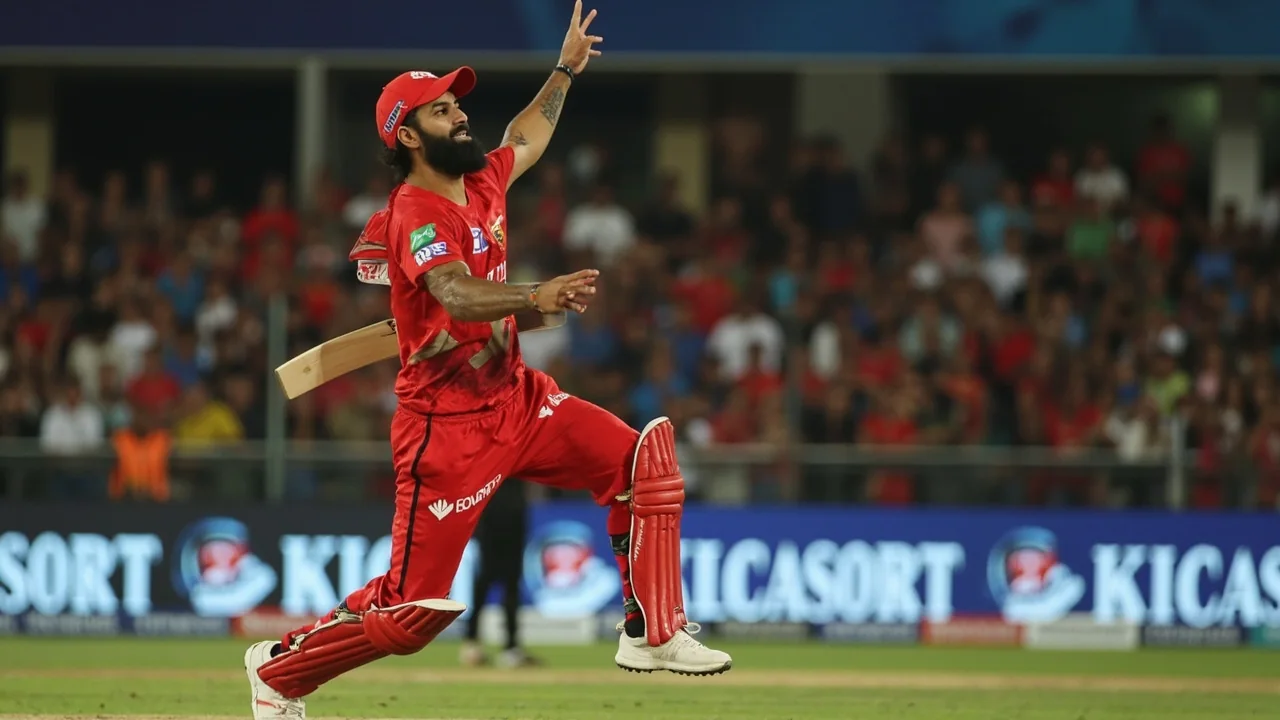
On 19 May 2026, the day the Rajasthan Royals hosted Lucknow Super Giants in the 64th fixture of IPL 2026, Cricket Addictor published a pre-match fantasy preview that framed the fixture in unusually honest terms. Jaipur. 7:30 PM IST. Royals needing to win to keep their playoff race alive, Giants already out of the running. The piece pulled together the available facts on the two squads, the form coming in, the Sawai Mansingh surface, the predicted XIs, the captaincy advice for small and grand leagues, and a winner call. Reading it back now, after the season ended, the value is not in who won - it is in how the available information was used to make a reasoned call before a ball was bowled.
For fantasy readers who joined the desk later or who want to see how a sensible preview was assembled from public data, the original piece is a useful baseline. It is also a reminder that a fantasy preview is, structurally, a small bridge between what has happened and what might - a set of working assumptions written 24 hours before the toss, in a format that has to be plausible enough to be acted on and humble enough to be wrong without damage to the writer's reputation.
The basics are not in dispute. Match 64 of IPL 2026. Rajasthan Royals at home against Lucknow Super Giants. Sawai Mansingh Stadium in Jaipur. 19 May 2026. A 7:30 PM IST start. The original preview recorded each of these and built the working assumptions on top of them. The scorecard aside shows the snapshot the preview worked with.
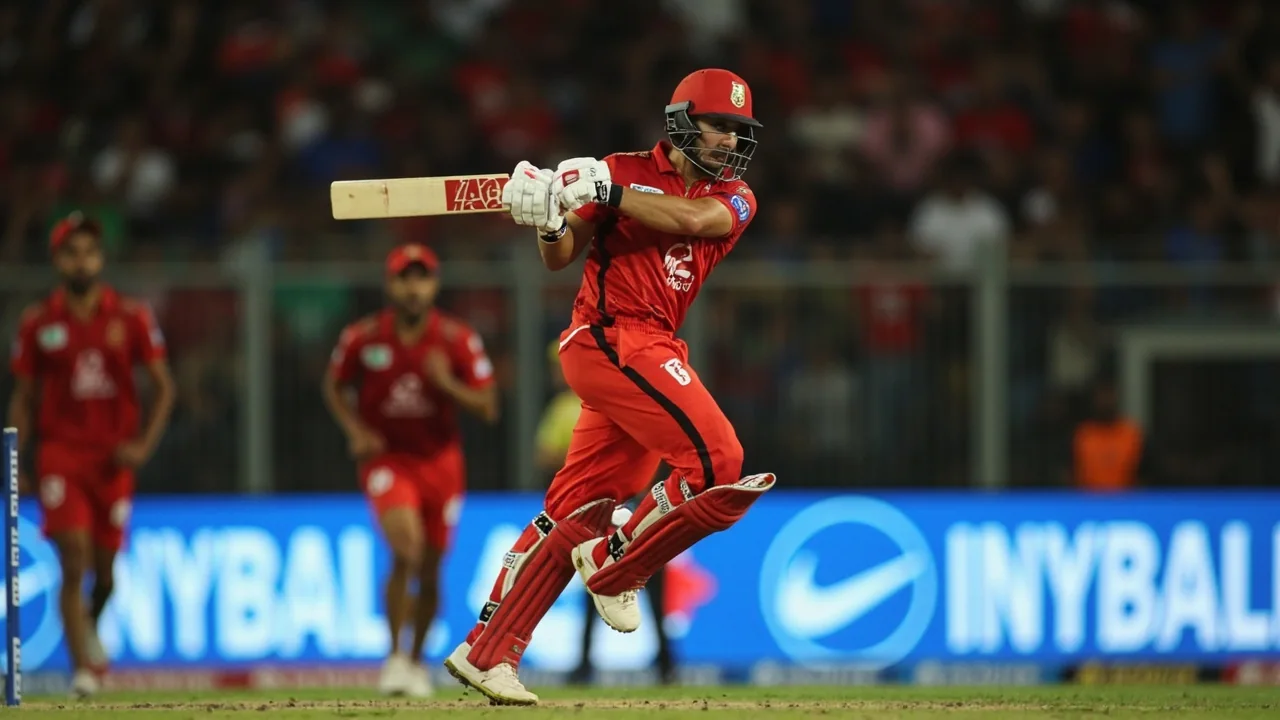
Sixth and bottom. That was the entries the preview led with, and the framing followed from there. Rajasthan Royals sat sixth with twelve points from twelve matches. Lucknow Super Giants sat bottom with eight points and were already out of playoff contention. The Royals had to win to keep their qualification arithmetic alive. The Giants were playing out the last block of league fixtures with the post-season displaced by the standings table.
The head-to-head record favoured Rajasthan. The preview recorded five Royals wins from the seven previous meetings between the two franchises. The most recent of those had gone the same way: on 22 April 2026, at the Ekana Stadium in Lucknow, Rajasthan had won by forty runs. Ravindra Jadeja had been named Player of the Match. Jofra Archer had taken three wickets. Both names would surface again later in the fixture, at very different roles on the fantasy card.
Form coming in pointed the other way. Rajasthan had lost their three previous fixtures - the preview named a recent reverse against Delhi Capitals as the most recent. Lucknow had won two of their previous three. The most visible piece of recent evidence for LSG was Mitchell Marsh's 90 off 38 against Chennai, which had dragged Lucknow over the line in their immediately preceding fixture. A reader using only form would have favoured the visitors. A reader using only standings and head-to-head would have favoured the hosts. The previewer's job was to weigh which signal mattered more.
Twelve points from twelve matches left Rajasthan one short of the conventional playoff threshold, with three group-stage fixtures remaining and net run rate the tiebreaker. Eight points from a likely fourteen or fifteen games left Lucknow mathematically out. The framing of the preview - Royals playing for survival, Giants playing for pride - is a structural feature of a fixture like this one, and it tells the fantasy reader something concrete about expected XI sequencing. Teams chasing a slot tend to play their best XI. Teams playing out the season tend to rotate.
Rajasthan: loss, loss, loss. The preview did not dress that up. Lucknow: won two of three. Marsh's 90 was the headline act but the supporting cast - Nicholas Pooran's stability at three, Aiden Markram's anchor innings, and Prince Yadav's wickets through the middle - gave the Giants a usable template for any surface. That template mattered because, as the preview noted, the Jaipur surface generally allowed free scoring once batters were set, which plays to Lucknow's middle order rather than to Rajasthan's top three.
The original preview ran a small venue table rather than a long passage. The numbers told most of the story. A batting-friendly surface that suited pace more than turn. An average first-innings score of 181. A chasing record that broke exactly down the middle across the available sample. The forecast was clear, with no rain expected, and the temperature reading was around 34 degrees Celsius at first use.
Those four numbers - 181 average first innings, fifty-fifty chasing record, pace-friendlier than spin-friendlier, clear weather - are the things a fantasy reader actually needs from a Jaipur preview. Length matters in places, but at Sawai Mansingh the larger square and the longer straight boundaries have always pushed the contest towards bowlers who can vary pace and batters who can clear the ropes, which is not quite the same thing as a flat track.
The chasing record is the read that worked hardest against Rajasthan. The preview did not soft-pedal it: half the games at this venue go to the side batting second, and the surface does not change enough between innings to flip that ratio. A toss call leaning towards bowl first was the implied advice, and it is the advice a careful reader would have written down.
Sawai Mansingh had hosted an earlier fixture in the week, and the picture from that match was consistent with the surface read. A 180-plus first innings was chased down with several overs to spare. The bowlers who found success were the ones who hit the hard length consistently and varied the pace at the back end - Archer and Shami across the two squads would have read as the template.
The preview did not put hard numbers on dew for Match 64, but it did flag humidity as a factor in the second innings. May in Jaipur is hot and dry by day and frequently cooler and damper after sunset, which is broadly what the venue's chasing record already implied. The practical consequence for fantasy was that batters from the chasing side would face slightly easier batting conditions as the match went on, and bowlers from the fielding side would need to keep a tighter line through the middle overs to compensate.
The preview carried a Rajasthan predicted XI and a Lucknow predicted XI in the conventional role-by-role format, with the captain and wicketkeeper flagged in the way the fantasy platforms expect. The Royals XI had Yashasvi Jaiswal and Vaibhav Sooryavanshi opening, Dhruv Jurel at three and wicketkeeping, Riyan Parag captaining at four, Ravindra Jadeja at five, Donovan Ferreira at six, Dasun Shanaka at seven, Shubham Dubey at eight, Jofra Archer at nine, Adam Milne at ten, and a frontline spinner at eleven in Brijesh Sharma or Yash Raj Punja. The Lucknow XI had Mitchell Marsh and Josh Inglis opening, Nicholas Pooran at three, Aiden Markram at four, Rishabh Pant captain and wicketkeeper at five, Mukul Choudhary at six, Abdul Samad at seven, Shahbaz Ahmed at eight, Mohammed Shami at nine, Mayank Yadav at ten, and Akash Maharaj Singh and Prince Yadav completing the attack.
Reading those XIs back now, two structural points are obvious. First, the spin depth on the Lucknow side was thin, which meant that if the surface did hold its line, Shami and Mayank Yadav would have had to do the early wicket-taking work on their own. Second, the Royals XI was thin on finishing, with Ferreira and Shanaka as the only real sixth-options and Jadeja the only batter who could both restart and accelerate; that is a workable structure for a settled chase but a difficult one to rebuild from a middle-order wobble.
For wicketkeeper, RR had Dhruv Jurel and LSG had Rishabh Pant and Nicholas Pooran - the preview's advice at this slot was always going to be split, with one Royals pick and one Giants pick for the safer double-up, plus an Inglis choice for grand-league readers willing to chase upside at the top. For all-rounders, Jadeja, Parag, Markram and Shahbaz were the four names that recurred across lineup templates; the preview named three of them and Shanaka as the differential. For bowlers, Archer and Shami were the two auto-picks; Prince Yadav was the differential pick; Mayank Yadav was the punt for grand-league entries.
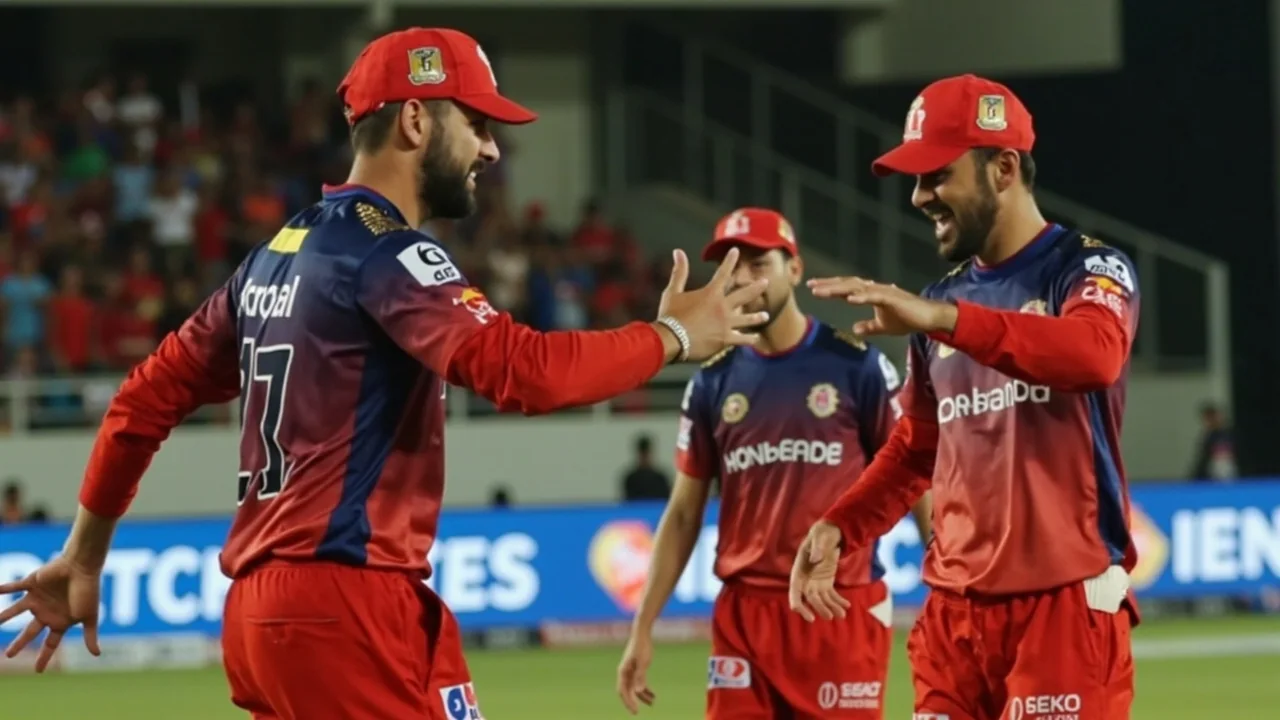
The preview's captaincy section did something a lot of pre-match pieces do not bother to do: it separated the small-league captaincy call from the grand-league one. Vaibhav Suryavanshi was the SL pick. Josh Inglis was the GL pick. The reasoning was line-of-form, not age of reputation. Suryavanshi's 486 runs from twelve outings was the strongest top-of-the-order return in the tournament at that point, with most of those runs coming off pace and most of them clearing the rope. Inglis, with 134 runs from three matches after his Lucknow move, offered a smaller sample but the highest per-innings ceiling on the card.
The vice-captaincy calls followed the same logic. Mitchell Marsh was the vice for the small-league XI, on the back of his 467 from twelve matches and his 90 in the previous game against Chennai. Yashasvi Jaiswal was the vice for the grand-league XI, anchored on his 327 from twelve matches and the venue's record for left-handers using the pace.
Punt picks were Prince Yadav for his 16 wickets from twelve matches and his role at the death, and Dasun Shanaka for the dual role - batting at seven and bowling the occasional seam-up spell against the spin-light middle of the Royals order. Players to avoid, in the preview's read, were Ayush Badoni and Tushar Deshpande, both flagged for low expected points in this specific fixture rather than for poor recent form in general.
SL captaincy in fantasy is essentially a frequency call. Pick the player most likely to bat, bowl or keep wicket for the full allocation of points. Suryavanshi fits that brief because his role is fixed and his form is reliable. A captaincy choice at 28% ownership is not differential - but it is also not the entire field, which is what an SL pick is meant to be: a high-floor call that does not need to win a contest by surprise.
GL captaincy is upside-seeking. Inglis fits because he opens, fields, and can produce a 60-plus at any time, but his ceiling is not in the same tier as a hot top-order batter, which is exactly what makes him an interesting punt. Used as captain with vice-captaincy on a high-floor Royals batter, the upside multiplies without the floor collapsing. That pattern - small-floor in one spot, upside in another - is the structural backbone of grand-league work, and the preview's table captured it cleanly.
The preview's winner prediction went to Lucknow Super Giants, on the back of their two-from-three recent form and the expectation that the chasing record at Sawai Mansingh would lift the second-innings side. The Royals' three-game losing streak was the most concrete negative factor on the other side of the ledger, and the preview treated it as more important than the head-to-head or the standings position.
Reading that call back now, with the benefit of having seen the season play out, the interesting question is whether a sensible preview should have called the other way. The Jaipur surface was friendlier to the chasing side. The LSG form was better. The Marsh-innings momentum was real. The Royals' need to win was the kind of pressure that cuts both ways - the good kind that produces a focused XI and a settled batting order, the bad kind that produces the panic shot that gets out the batsman who should have been setting the chase.
Either outcome would have been defensible against the data the preview was working with. Predicting matches in mid-May from a small sample and a single venue read is, structurally, a fifty-fifty exercise with priors attached. The preview attached strong priors to form and the chasing record, and it called the side that those priors favoured. The winning or losing of that call is informative, but it is not the kind of evidence that overturns the priors.
A fantasy preview is, at best, a thin layer of structured reasoning between public data and a private decision. The preview that runs before a fixture will be wrong at least some of the time, and it will be wrong in ways that look obvious only in retrospect. The honest move, when writing one, is to keep the reasoning visible: state the priors, name the inputs, and produce a prediction that can be checked against the result. This preview did that. Reading it back, the production craft is the durable thing, not the call.
Suryavanshi's 486-run season tally and Marsh's 467-run tally were both well anchored in the public record; both figures tracked through to the end of the tournament. Prince Yadav's 16-wicket season tally also held; his wicket-taking load was the kind of stat that does not need a hot streak to validate. The Jaipur surface read - first-innings average 181, chasing record roughly even - held across the match-week block, with the caveat that the surface had been used the night before and that condition may have tilted behaviour for the second match.
The Marsh 90-in-38 figure was the cleanest situational input; the innings was still recent and the form was still live. The Royals' three-game losing streak, by contrast, was a softer signal. A three-game streak is statistically small and could reverse at the toss with one calm opening stand. A previewer who downweighted that streak and gave more weight to the head-to-head record and the home conditions would have had a defensible case for calling the Royals.
The punt-pick logic was sound. Shanaka and Prince Yadav both had identifiable roles for fantasy points that did not depend on becoming the leading scorer - Shanaka for the sixth-options score, Prince Yadav for the wicket-pick. Those are the kinds of picks that pay off quietly in long-format fantasy and that previewers often skip in favour of the headline names.
A preview written before a match is meant to be consumed in a hurry, on the train to the ground or in the queue for the fantasy platform. A retrospective read of that preview is meant to do something different: it is meant to show, in slow time, the inputs and the priors, the picks and the absences, the captaincy calls and the punt calls, in a format where a reader can see what the previewer saw and where the reasoning held and where it did not.
That is the value of going back over Match 64 now, with the season finished and the standings set. The preview is a snapshot of pre-match reasoning built from public data. The retrospective is the same snapshot, with the result framing added in the form of outcome-aware comment rather than outcome-altering editing. Between them, the two pieces give a fantasy reader who is learning the trade a worked example of how a sensible captain pick was assembled, what signals were weighted more heavily, and where the reading would have been different if the inputs had been different.
The other use is anecdotal rather than instructional. The IPL is built around narratives that recurse - a pinch-hitter who finishes a match in the eighteenth over, a fast bowler who takes three at the death, a left-hander who clears the rope against off-spin - and the previews that handle those narratives well are the ones that read cleanest in retrospect. Going back over Match 64 is a way of showing what that handling looks like, and where it could have been sharper.
Match 64 was previewed as a contest between a Royals side that needed to win and a Giants side that was playing out the season. Form favoured Lucknow. Standings favoured Rajasthan. The head-to-head favoured Rajasthan and the venue record split evenly. The captaincy calls were Suryavanshi for SL, Inglis for GL, Marsh for SL vice, Jaiswal for GL vice. The punt calls were Prince Yadav and Shanaka. The players to avoid were Badoni and Deshpande. The winner prediction was Lucknow. The reader who arrived at the preview with twenty minutes to make a fantasy decision had, in those calls, the inputs needed to build a lineup that week. The reader who arrives at the retrospective now has the same inputs, with the additional context of how the season played out and how the preview's priors compare to the result. Both modes of reading are valid. The retrospective is just the slower one.
For desk coverage that goes wider than the match-by-match scope - the season structure, the playoff arithmetic, the captaincy playbook at league level - the full match prediction desk and tonight's captain picks stay the operative surface. Match 64 was a single fixture on a long calendar, and the preview read it that way: a single 7:30 PM window in Jaipur, with two teams in distinct positions, on a surface that splits the chasing side from the side that bats first, with a captain pick and a differential that the previewer could defend from the public record. That is the most a pre-match preview can promise, and Match 64's preview delivered it.
A short list of related pieces on the desk for readers who want to extend the Match 64 retrospective into the broader season context.
Wankhede evening fixture. Captain pick: Suryakumar Yadav. Differential: Ravindra Jadeja. Avoid: Trent Boult.
Read →When to back the low-ownership pick. Three match conditions that justify differential captaincy, and recent case studies from the 2025 season.
Read →Six seasons of Chinnaswamy data. Why the chase rate has flipped three times in four years - and what that means for captain picks.
Read →